




Qualitative Research in Trials

Qualitative research in trials methodology can provide insights into people’s experiences and perspectives to ensure that trials are designed ethically, inclusively, and in ways that work in real-world practice.


Qualitative research can explore what matters to the people involved in trials – patients, families, healthcare professionals, communities and trial teams. By understanding their experiences and perspectives, we can design trials that are more ethical, inclusive and practical. These insights can inform every stage of trail design and delivery, from how we recruit and support participants, to how we develop and test interventions that truly meet people’s needs.

Embedded within the HRB-TRMN is the Qualitative Research in Trials Centre (QUESTS). The mission of QUESTS is to maximise the value of qualitative research in trials. Below is a list of research activity involving QUESTS.
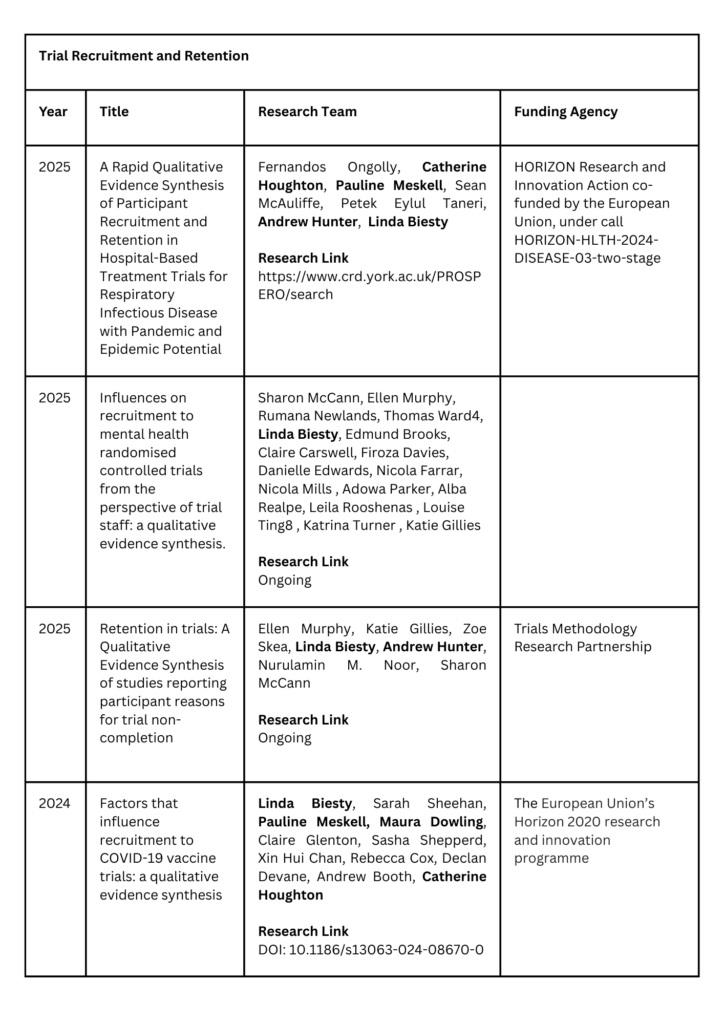
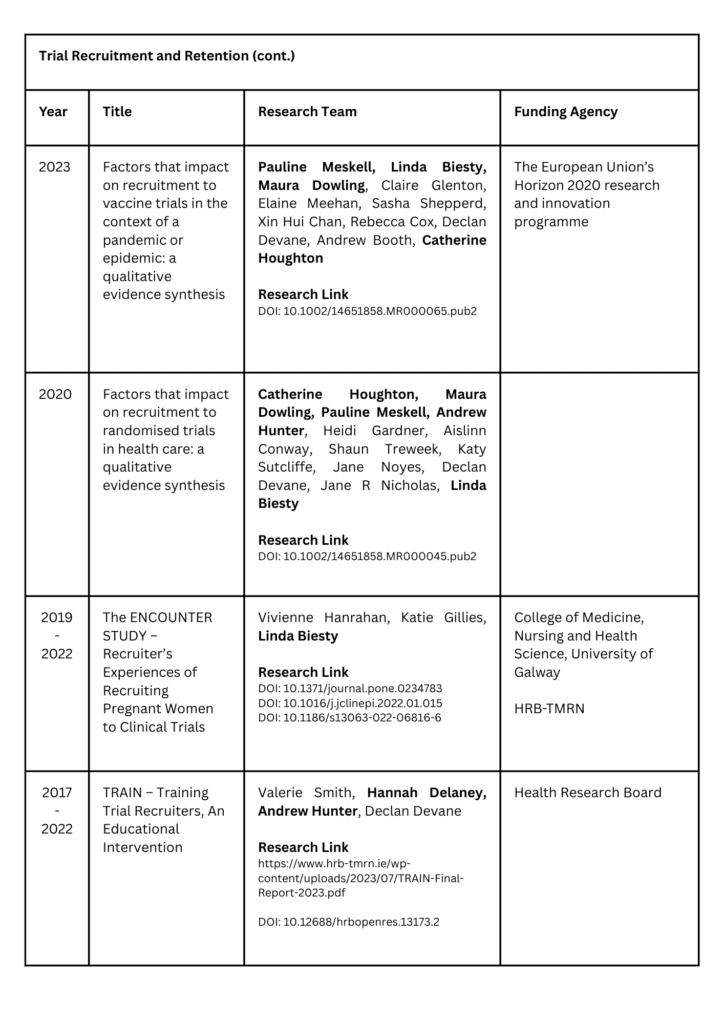
Trial Recruitment and Retention

Recruitment and retention challenges become windows into trial design. QUESTS transforms qualitative insights from all interest holders, including trial participants and recruiters, to an evidence base that shapes how trials are designed and conducted.

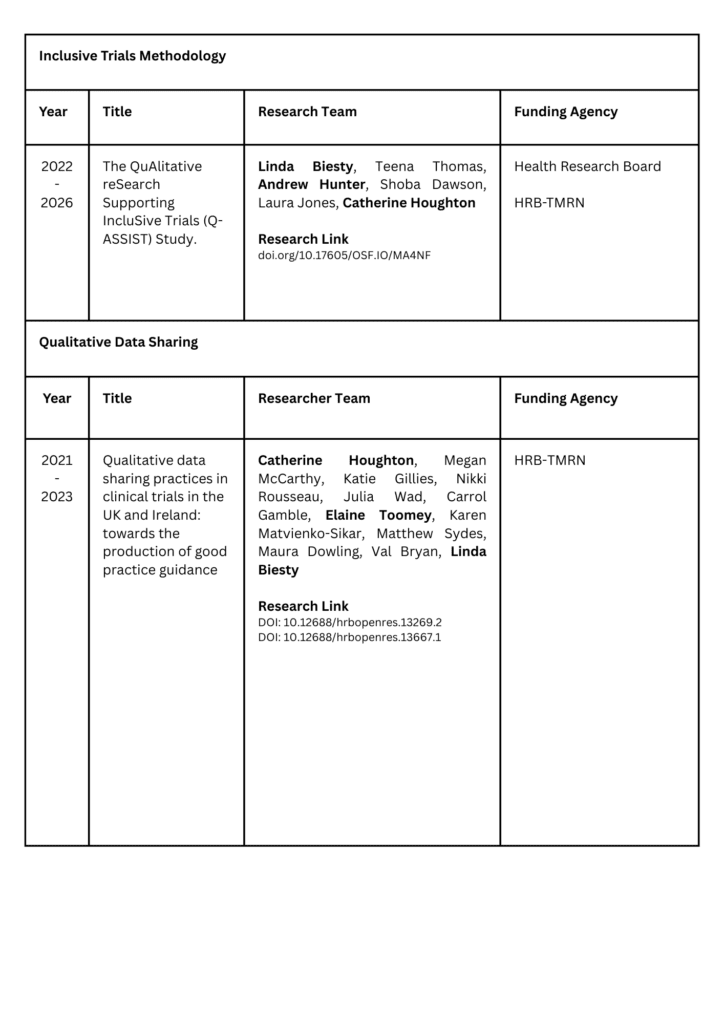
Inclusive Trials Methodology

Inclusive trials require inclusive design processes. Through the Q-ASSIST STUDY (QuAlitative reSearch Supporting IncluSive Trials) QUESTS are exploring how qualitative research methods can support inclusivity across all stages of a clinical trial.

Qualitative Data
Sharing

Data sharing can extend the life and impact of trial insights beyond a single study.

QUESTS have examined best practices for sharing qualitative research data generated within trials.

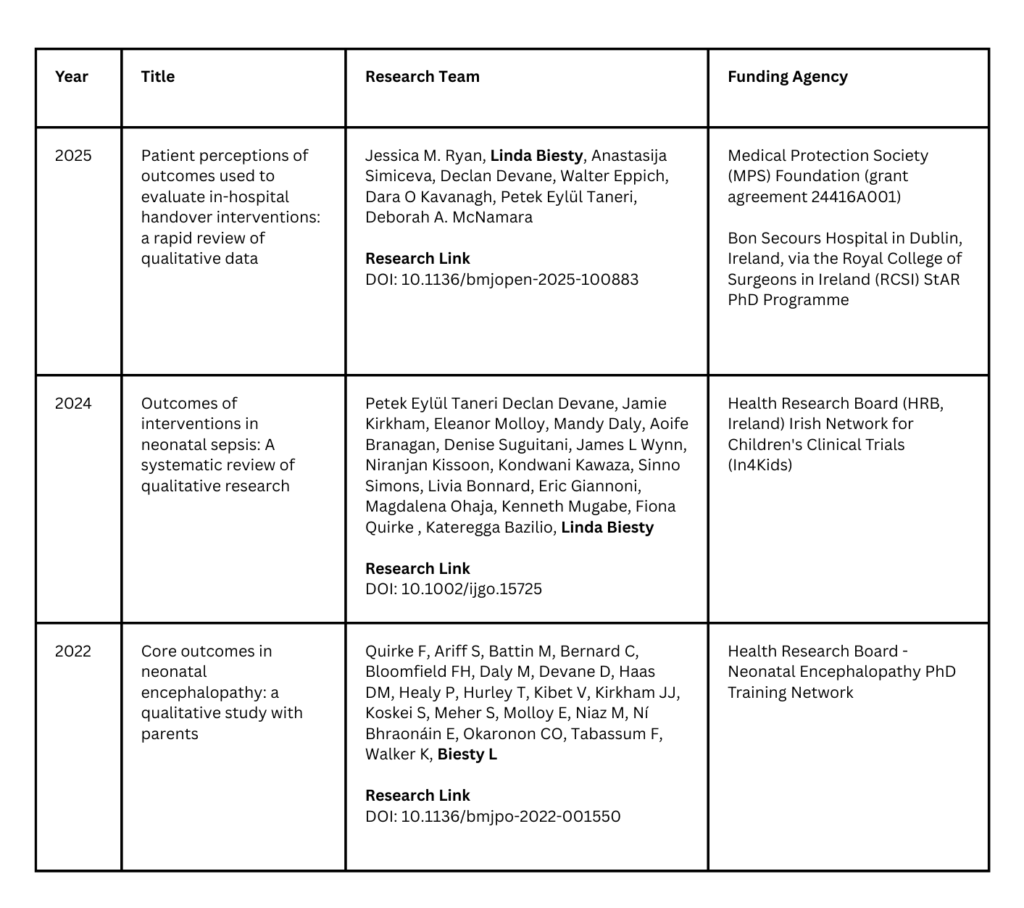
Core Outcome Set Development

Core Outcome Sets (COS) guide trials to measure what truly matters to patients, the public, healthcare practitioners, researchers and policy makers. QUESTS use qualitative research to identify and integrate these perspectives, ensuring COS development reflects real-world priorities.

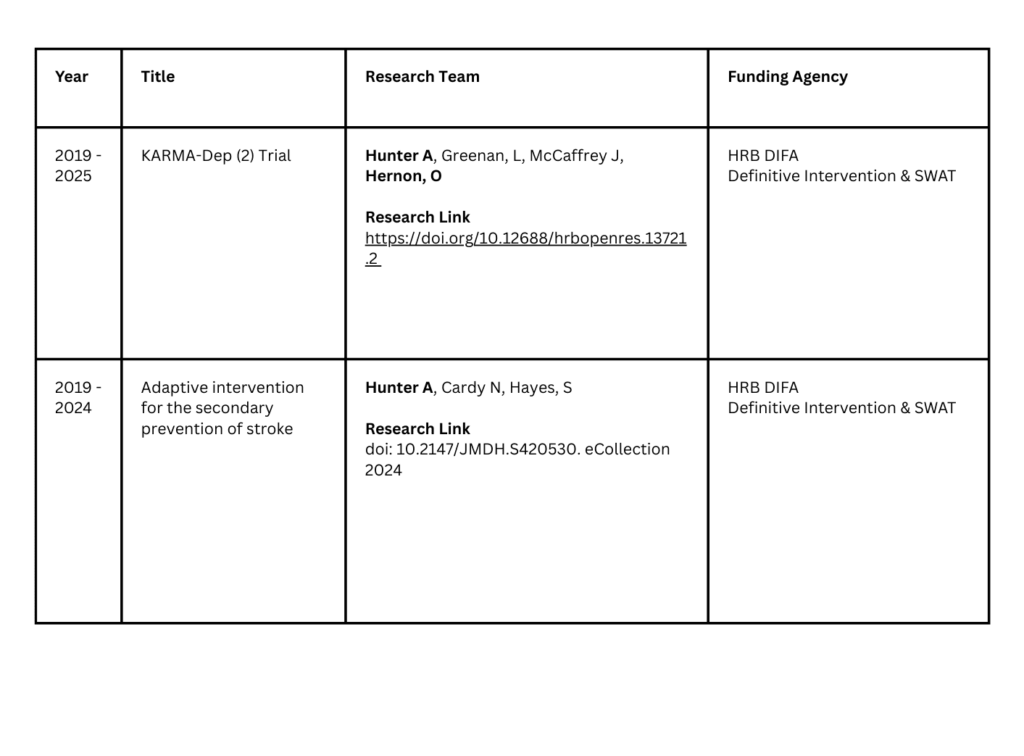
Studies Within A Trial

SWATs generate evidence on trial conduct by exploring methodological questions within trials. QUESTS embeds qualitative methods into SWATs to understand how different strategies affect e.g. participant experiences, recruitment decision and trial retention, capturing what works and for whom.

Get the latest HRB-TMRN news